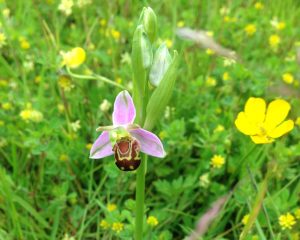
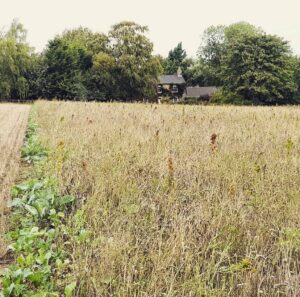


The whole farm has been in conservation schemes since 2000. In the first years of the scheme we planted over 9km of hedges, these are mostly over 2m high now. Many fields have 6m grass margins, it has been very interesting watching the gradual plant diversification and the associated wildlife. One of the great successes has been the construction, in grass fields, of shallow ponds and scrapes and the raising of the water table to provide habitat for ducks and waders, large numbers of birds can be seen on these sites, we have even had a European Crane visit!
Roe deer and Muntjac deer breed very successfully and are regularly seen.
There has been a huge increase in the number of birds of prey; buzzards are everywhere, red kites are seen regularly, marsh harriers nest and ospreys visit on their migration.
There is a spring fed lake that is home to frogs, toads and great crested newts as well as a large number of coarse fish. It is very encouraging to see the breeding success of the fish and amphibians.
We currently have a large Sustainable Farming Incentive (SFI) scheme, which supports us in growing crops to enhance biodiversity and soil health. These include: mixed winter cover crops (a mixture of plants chosen to protect and enrich the soil); herbal leys (a mixture or grasses, legumes and herbs which are good for the soil and produce quality grazing), pollen and nectar mix (flowering plants chosen for their benefits to pollinators) and winter bird seed mix (plants that form seed heads that are a good source of food for birds over the winter).
SFI also helps to fund sympathetic hedge management and grass buffer strips, which provide wildlife corridors and protection to watercourses from run off. SFI also encourages us to manage our artificial inputs better, and we have committed to reduced use of insecticides and to more target variable rate application of nutrients, as we seek to make our farming system more sustainable and more regenerative.